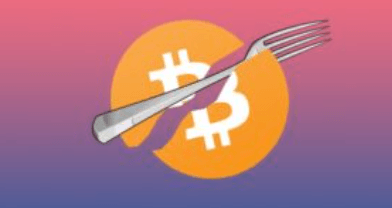

Blockchain forking is the divergence of a chain’s valid state into competing paths, typically triggered by protocol changes or disagreement on rules. It distinguishes governance from execution and highlights consensus, security, and upgrade incentives. Forks can be soft, preserving backward compatibility, or hard, creating immutable splits. The implications touch users, miners, and developers, shaping risk, incentives, and resilience. This framework invites careful consideration of upgrade processes and governance mechanisms to prevent unintended splits.
What Is Blockchain Forking and Why It Happens
Blockchain forking occurs when the state of a blockchain diverges into two or more competing paths, typically due to changes in protocol rules or disagreements among participants.
The phenomenon is analyzed as a structural decision process, separating governance from execution.
It raises considerations about forbidden topics and unrelated concepts, yet remains focused on consensus mechanics, security implications, and how freedom to innovate intersects with network integrity.
Types of Forks: Soft Forks vs. Hard Forks Explained
Soft forks and hard forks represent two fundamental approaches to updating a blockchain protocol. Soft forks implement backward-compatible changes that restrict features, enabling smoother adoption while preserving prior rules.
Hard forks require consensus to diverge rules, creating an immutable split unless participants converge on a single path. Both influence forking incentives and protocol upgrades, shaping governance, security assessments, and long-term network resilience.
How Forks Impact Users, Miners, and Developers
Forks affect the stakeholders of a blockchain ecosystem by altering incentives, access to rules, and the availability of network services.
The analysis targets users, miners, and developers, emphasizing practical impact.
Fork economics describes value shifts and fee structures across branches.
Miner incentives align with block rewards, hardware utilization, and energy costs, shaping participation decisions and network security under divergent protocol trajectories.
Governance, Risks, and Best Practices for Upgrades
Governance, risk, and upgrade best practices quantify how protocol changes are initiated, evaluated, and executed within a distributed system. Governance models delineate stakeholder roles, voting mechanisms, and conflict resolution, while upgrade processes formalize proposal lifecycles, compatibility checks, and rollback options.
Risks are quantified through formal security reviews, incentive alignment, and downtime impact, guiding transparent, disciplined evolution without compromising decentralization or user autonomy.
Frequently Asked Questions
How Does a Fork Affect Transaction Finality and Reversals?
A fork shifts consensus rules, impacting transaction finality and reversals: fork consequences include potential temporary reorganization, uncertain finality timing, and possible reversals on the shorter chain. Nodes align with longest valid chain, minimizing reversible outcomes.
Can Forks Be Exploited by Malicious Actors for Double-Spending?
Forks can be exploited by malicious actors for double-spending under weak fork security; safeguards rely on cross chain governance to enforce finality. Like a tightrope walker, the protocol balances risk, transparency, and user autonomy in distributed systems.
What Role Do Node Operators Play During a Fork?
During a fork, node operators participate in node governance by selecting which chain to follow, coordinating upgrades, and validating blocks. Their decisions affect network latency, synchronization, and consensus stability, enabling an open, trust-minimized environment for participants seeking freedom.
How Are Coinbase Rewards Handled Across Forked Chains?
“Like a shifting tectonic plate, coinbase rewards are split after a fork according to the longest-chain rule or designated distribution.” The answer addresses reorg risk and governance disputes, detailing how rewards may diverge across forked chains, affecting holder entitlement.
Do Forks Impact Smart Contract Compatibility Across Chains?
Forks can affect smart contract compatibility across chains, depending on shared state and virtual machine support, impacting cross-chain tooling and fork governance. Detailing feasibility requires evaluating bridges, EVM equivalence, and consensus rules for each chain.
See also: The Future of Encryption Technologies
Conclusion
Blockchain forking reshapes consensus by splitting paths when protocol rules diverge, prompting divergent histories and stakeholder incentives. Soft forks constrain capabilities while preserving compatibility; hard forks create immutable, divergent chains. Impacts ripple through users, miners, and developers, influencing security, upgrade strategies, and governance dynamics. Best practices emphasize clear upgrade coalitions, testnets, and transparent communication to minimize disruption. A fork is governance in motion, a tectonic shift in rules that tests resilience, adaptability, and the integrity of the decentralized promise.